What Your Carpet Is Trying to Tell You: Carpet Cleaning Harlem New York — 2026 Guide for Upper East Side Residents
Your carpet doesn’t send a text message when it’s in trouble. It leaves other signals some obvious, some easy to dismiss and most Upper East Side and Harlem residents don’t catch them until the damage is already costing more to fix. We’ve been doing carpet cleaning in Harlem, New York and across Manhattan long enough to know that the calls we wish we’d gotten sooner are always the ones that start the same way: “It wasn’t that bad a few months ago.” This article lays out exactly what to look for, what each sign means, and whether you need us out this week or whether you can monitor it for a little longer.
Last spring, a longtime renter in East Harlem called us after her landlord’s walkthrough flagged the carpets for replacement. She’d been living with the warning signs for over a year a faint sour smell near the bedroom door, a gray cast along the hallway runner, and a persistent cough her doctor couldn’t fully explain. One professional extraction visit later, the carpets were salvaged, the smell was gone, and she kept her security deposit. The signs were there. She just didn’t know what they meant.
Warning Signs Your Carpet Needs Professional Attention Now
Work through this list room by room. These aren’t abstract conditions they’re things you can see, smell, or feel underfoot today.
1. A smell that returns within a day or two of vacuuming
Surface vacuuming lifts lose debris. It does nothing for bacterial buildup, pet dander, or moisture that’s settled into the backing. If a musty or sour odor comes back fast after you vacuum, it means the source is below the pile in the pad or subfloor. Call a pro now. This won’t resolve on its own, and in a Harlem or Upper East Side apartment with minimal ventilation, it will get worse through summer humidity.
2. Gray or brown trails along high-traffic paths
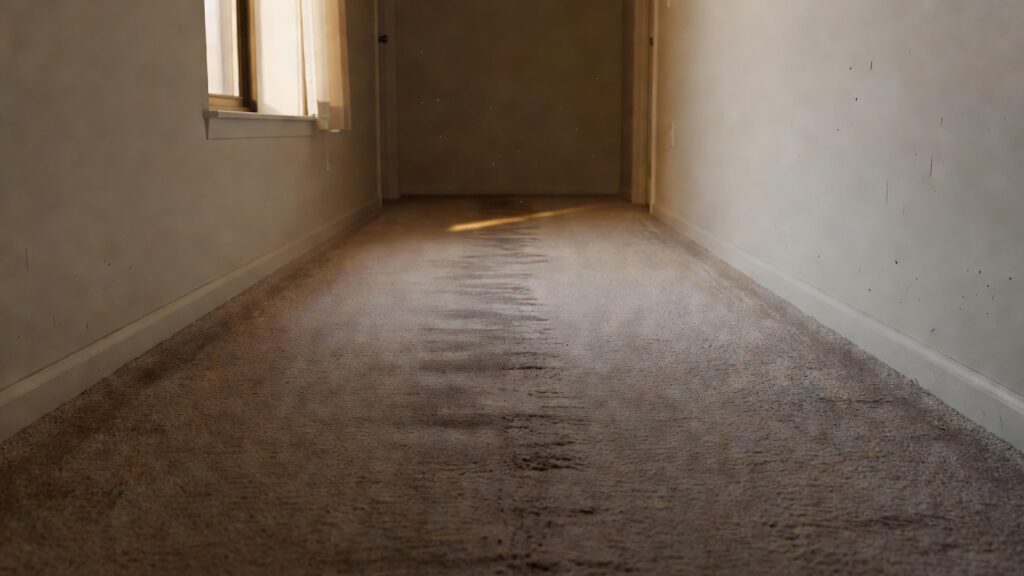
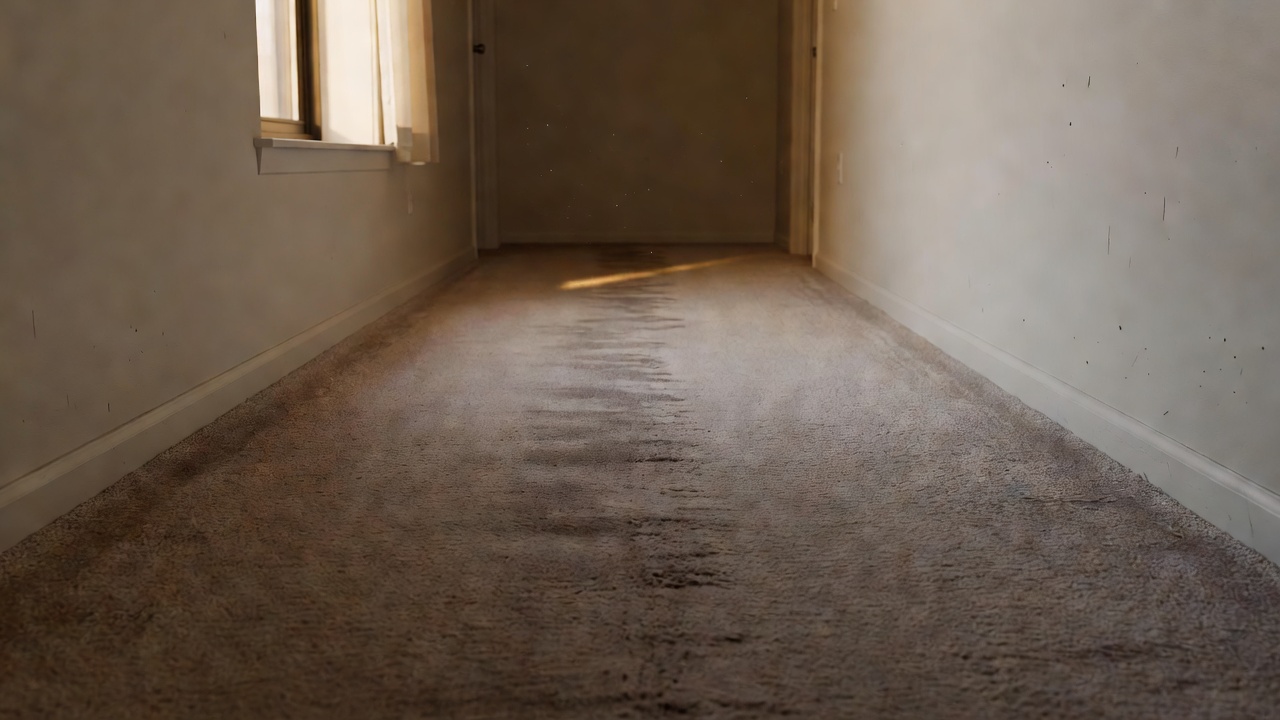
The hallway from your front door to your kitchen. The strip between the couch and the TV. These darkened lanes are called traffic lanes, and they form when fine soil skin cells, street particulate, cooking grease embeds below the surface fiber. According to New York City’s density over 27,000 residents per square mile in Manhattan NYC apartments accumulate foot-traffic soil and pollutants significantly faster than suburban homes, making more frequent professional cleaning advisable. Call a pro now if the discoloration is visible from standing height. You can monitor it if it only shows up in raking light.
3. Carpet fibers that feel stiff or crunchy underfoot
Healthy carpet fibers have given. When they feel brittle or matted in a specific zone often around seating areas or a desk chair it usually means a spill was cleaned at the surface but never fully extracted. The residue dried in the fiber, attracting more soil and causing the stiffness. This is textbook over-wetting from consumer machines or untreated spills. Call a pro now. Left alone, that residue acts like a magnet and the spot will return darker each time.
4. Allergy symptoms that ease up when you leave the apartment
This one is harder to spot, but patients notice it. If your nose clears up when you’re at work in Midtown or visiting family in Astoria, and the congestion returns when you’re home, your carpet may be a significant factor. The American Lung Association notes that carpets can hold up to four times their weight in dirt, debris, and allergens, making regular deep cleaning essential for households with children or pets. Call a pro now if symptoms are persistent. Monitor it if it’s only occasional sneezing around shedding season.
5. Visible staining that has spread or darkened since you first noticed it
A stain that grows is a stain that’s wicking. Moisture trapped below the surface is pulling the soil outward as it tries to evaporate. This happens frequently with wine, coffee, and pet accidents that were blotted at the surface but not extracted through the backing. The longer it sits, the larger the affected area. Call a pro now.
6. White powdery residue appearing near old stain sites
This is mineral deposit from tap water used in a prior cleaning attempt or it’s dried cleaning product that was never properly rinsed. Either way, it signals that something below the fiber surface is continuing to migrate upward. We see this constantly in prewar co-ops on the Upper East Side and in older walk-ups in West Harlem where residents have tried rental machines that didn’t have adequate extraction power. Monitor it if it’s a small, isolated spot; call a pro now if it’s recurring across multiple areas.
7. Pet urine odor that spikes in warm or humid weather
Urine salts reactivate with humidity. If you have a dog or cat and notice the odor gets noticeably worse in July or August, the urine has penetrated the backing and possibly the pad. Surface sprays and enzyme treatments sold at pet stores address the top layer only. Call a pro now. This is one situation where waiting genuinely increases the cost of the job — urine that saturates the pad typically requires pad replacement in addition to cleaning.
8. Carpet that matts back down immediately after you rake or brush it
Pile that won’t stand up has lost its resilience because the fibers are either deeply soiled, structurally damaged from improper cleaning, or simply overdue for professional care. The Institute of Inspection, Cleaning and Restoration Certification (IICRC) recommends that residential carpets be professionally cleaned at least once every 12–18 months to maintain appearance and indoor air quality. If you can’t remember the last professional cleaning, that’s already past the recommended window. Call a pro now.
How to Vet a Carpet Cleaning Company in Harlem or the Upper East Side
Knowing you need a pro is half the battle. Hiring the right one is the other half, and this is where a lot of Manhattan residents get burned. Here are the questions worth asking before anyone brings equipment into your home.
Ask for IICRC certification upfront. It’s a straightforward industry credential that requires technicians to pass standardized training. Any legitimate company serving Harlem, the Upper East Side, or anywhere in the five boroughs should be able to confirm this without hesitation.
Ask specifically what method they use. Hot water extraction, endorsed by most major carpet manufacturers including Shaw and Mohawk, is widely recognized as the most effective method for deep-cleaning carpets and removing embedded soils. If a company leads with “dry cleaning only” or can’t explain their process clearly, that’s worth probing further.
Get the price in writing before they start. Bait-and-switch pricing is common in New York — a low teaser rate per room that doubles once technicians are inside and citing “heavily soiled” upcharges. Any company worth hiring will give you a flat or clearly structured quote based on actual square footage, not per-room guesswork.
Red flags to walk away from:
- No physical address or verifiable NYC business license
- Quotes given over the phone without asking any questions about carpet type, size, or condition
- Pressure to book same-day with a discount that “expires tonight”
- Technicians who arrive without professional equipment — a portable residential machine is not a truck-mount
- No insurance or refusal to provide proof of liability coverage
Why Choose Adam’s Carpet Cleaning in Harlem and the Upper East Side
We’ve been cleaning carpets in this part of Manhattan for years — prewar co-ops on Fifth Avenue, rent-stabilized walk-ups in Central Harlem, newer condos in East Harlem, and everything in between. We’re IICRC-certified, we use truck-mounted hot water extraction on every residential job where building access allows it, and we give written quotes before any work begins. We know the building constraints, the older carpet types common in Upper West Side and Harlem apartments, and the specific soiling patterns that come from city living at this density.
We’re not a call center that dispatches whoever’s available. When you book with Adam’s Carpet Cleaning NYC, you get technicians who’ve worked this neighborhood, know the elevator restrictions in older buildings, and show up with the right equipment for the job.
If you spotted two or more warning signs on this list, it’s time to have someone take a look. Reach out to us at adamscarpetcleaningnyc.com to get a straight answer and a real quote — no pressure, no inflated add-ons.
Frequently Asked Questions
How often should Harlem and Upper East Side apartment carpets be professionally cleaned?
The IICRC recommends professional cleaning at least every 12 to 18 months for residential carpets. In Manhattan, where foot traffic and urban particulate are significantly higher than suburban environments, once a year is more realistic especially in households with children, pets, or anyone with respiratory sensitivities. If your carpet shows any of the warning signs listed above, don’t wait for the annual window.
Is carpet cleaning Harlem New York different from cleaning carpets in other parts of the city?
The core process is the same, but Harlem and Upper Manhattan have a higher proportion of prewar buildings with specific access challenges narrow hallways, older elevator dimensions, and subfloor materials that affect how extraction equipment is set up. An experienced local company will account for this in their quote and equipment selection. We’ve worked in enough buildings on 125th Street and along Lexington Avenue to know how to adapt without cutting corners on the job itself.
What should I do between professional carpet cleanings to slow down soiling?
Vacuum high-traffic areas at least twice a week using a machine with a HEPA filter. Place quality mats at every entry point not just decorative ones, but mats with enough pile to actually capture grit before it reaches the carpet. Treat spills immediately by blotting from the outside in, and never scrub. And avoid over-wetting with consumer cleaning sprays residue left in the fiber attracts more soil faster than the original stain would have.
Related from Adams Carpet Cleaning NYC: Affordable Carpet Cleaning in Queens, NY · Dry Carpet Cleaning in Manhattan, NY · And Eco Friendly Care Manhattan
Our services
And Eco · And Eco Friendly Care Manhattan · An Eco · And Eco · Rug Cleaning Bronx · And Eco Friendly Care Manhattan