Smart Area Rug Cleaning Specialized Care: 2026 Guide for The Bronx Residents
About 60 percent of NYC apartment dwellers use area rugs to cover hardwood or tile floors and in dense, high-traffic neighborhoods like Fordham, Pelham Bay, and Riverdale, those rugs collect more grime per square foot than most people realize. Area rug cleaning specialized care is not a single task you do once a year; it is a layered process where some steps are genuinely manageable at home and others, if done wrong, cause permanent damage that no cleaner can reverse. Last spring, a homeowner on the Grand Concourse called us after attempting to deep-clean a 9×12 Persian wool rug with a rented steam machine. The pile had bloomed, the dyes had bled at one corner, and the backing had separated. The rug had been in her family for over two decades. We were able to stabilize it, but full restoration was not possible. That phone call is why we wrote this guide.
Before You Start
Know what your rug is made of before you touch it with any product or machine. This single fact determines almost every decision below. Check the label sewn into the backing, or take a photo of the pile and backing and send it to us we will tell you the fiber type for free. The most common types we see across The Bronx are:
- Wool — hand-knotted or tufted, often heirloom or high-value
- Synthetic (nylon, polyester, polypropylene) — machine-made, more forgiving
- Cotton flatweaves and kilims — dye-bleed risk is real, especially in older pieces
- Silk or silk-blend — do not attempt any DIY cleaning; call a professional immediately
- Natural fiber (jute, sisal, seagrass) — water is the enemy; even mild moisture can cause mold in a Bronx apartment with limited airflow
Also note your rug’s construction: hand-knotted rugs have significantly more value and fragility than tufted rugs with a latex backing. When in doubt, treat it like it is worth more than you think, because it probably is.
Step 1: Dry Soil Removal — What You Can Do Right Now
Before any liquid touches your rug, remove as much loose dry soil as possible. Take the rug outside if you can a fire escape landing, a building courtyard, or the sidewalk on a dry morning all work. Beat the back of the rug gently with a broom handle or a rubber-tipped tool, then vacuum both sides using a low-suction setting. Avoid beater-bar vacuums on wool or hand-knotted rugs; the mechanical agitation pulls and breaks fibers over time.
New York City’s density over 27,000 residents per square mile in Manhattan, and similarly packed corridors in Mott Haven and Highbridge means foot traffic deposits tracked-in soil, street particulates, and subway dust at a rate that suburban homes simply do not experience. Vacuuming once a week in high-traffic rooms is not excessive; it is maintenance.
Step 2: Spot-Test Any Cleaning Product
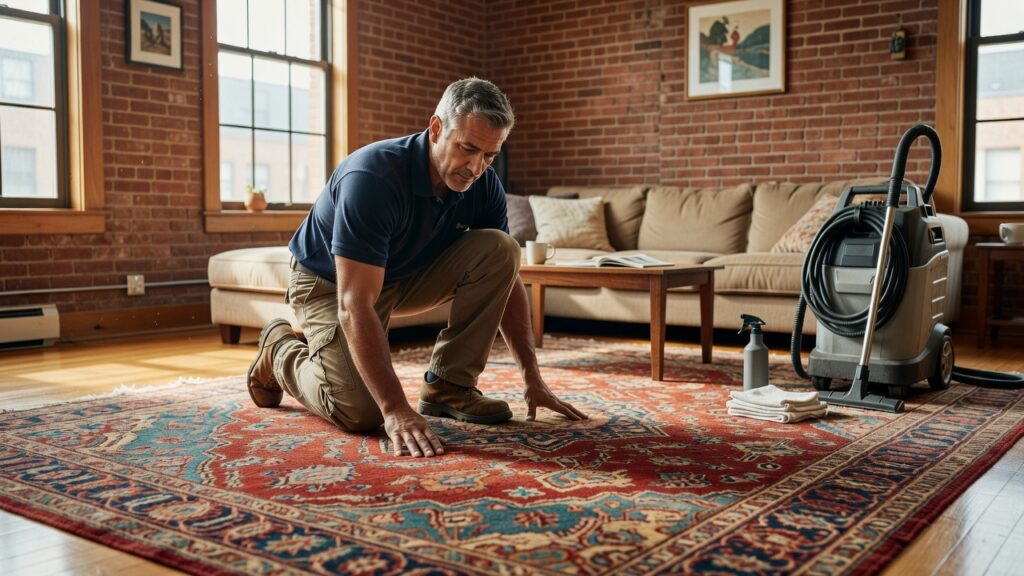
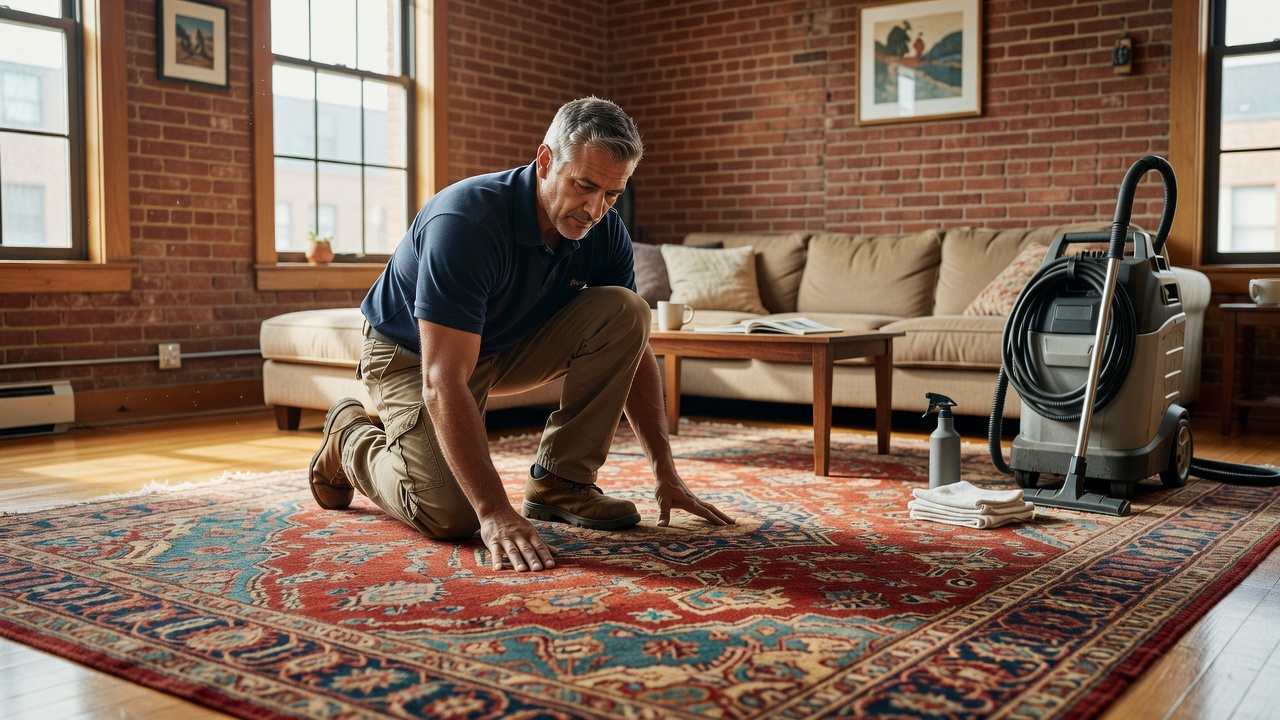
This step is skipped more often than any other, and it is the one that causes the most damage. Apply a small amount of your chosen cleaner to a hidden corner ideally the back edge that sits against a wall. Wait five minutes. Blot with a white cloth. If you see color transfer, stop. The rug’s dyes are not stable enough for that product, and proceeding will spread the problem across the face of the rug.
For synthetic rugs, a diluted solution of dish soap and cool water is a reasonable spot cleaner. For wool, use a wool-safe cleaner with a neutral pH. For anything you are uncertain about, skip the product entirely and call us. A phone consultation costs nothing.
Step 3: Address Fresh Spills Correctly
Blot never rubs. Work from the outer edge of the spill toward the center to avoid spreading it. Use a clean white cloth or paper towel and firm, downward pressure. For liquid spills, follow with a small amount of cold water to dilute, then blot again until the cloth comes up clean and dry.
Red wine, pet urine, and coffee are the three calls we get most often from customers in Kingsbridge, Morris Park, and Co-op City. All three are manageable within the first 30 minutes if handled correctly. All three become significantly harder after 24 hours, and some particularly pet urine that has wicked down into the backing require professional equipment to fully remove. The odor source is in the backing and pad, not just the face fibers, and no amount of surface blotting reaches it.
Step 4: Understand What DIY Machines Actually Do
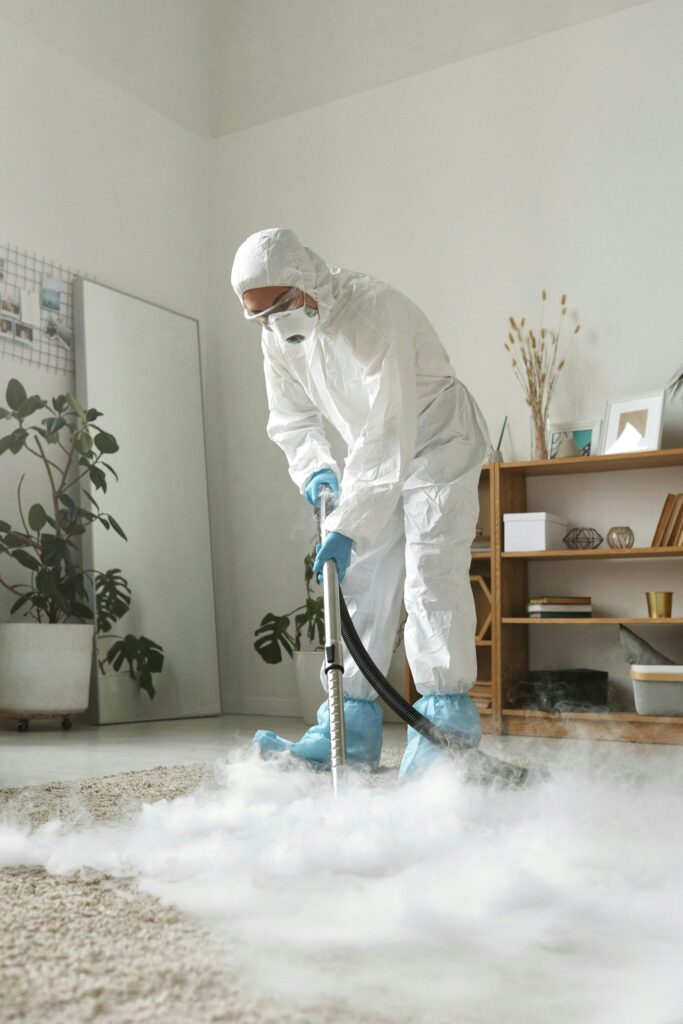
Rental carpet machines are designed for wall-to-wall broadloom, not area rugs. They inject solution and extract it, but the water pressure and temperature are not calibrated for delicate fibers, and the extraction power is often insufficient to pull moisture out of a thick pile. A wool rug left damp for more than a few hours develops mildew a particular concern in Bronx apartments where ventilation can be limited, especially in older pre-war buildings common along the Concourse and in Tremont.
According to the Institute of Inspection, Cleaning and Restoration Certification (IICRC), residential carpets and rugs should receive professional cleaning at least once every 12 to 18 months to maintain both appearance and indoor air quality. That interval shrinks for homes with pets, children, or allergy sufferers. Hot water extraction, endorsed by major carpet manufacturers including Shaw and Mohawk as the most effective deep-cleaning method, requires commercial-grade equipment and trained technicians to be done safely on area rugs particularly those with natural fibers or hand-knotted construction.
Step 5: Recognize the Signs That a Pro Is Required
Some situations should not be approached as DIY projects, full stop. Hand over the rug to a professional when you see any of the following:
- Dye bleed or color transfer when blotting
- A musty or sour odor that persists after surface cleaning — this indicates microbial growth in the backing
- Fringe that is matted, discolored, or unraveling
- Pet urine contamination across more than one area
- Any silk, antique, or hand-knotted rug regardless of the type of soil
- Visible mold or discoloration on the backing
According to the Environmental Protection Agency, indoor air can be 2 to 5 times more polluted than outdoor air, and carpets and rugs trap allergens, dust mites, and bacteria that degrade air quality over time. A rug with biological contamination mold, pet urine, heavy pest debris is not just an aesthetic problem. Professional extraction and treatment are the only ways to adequately address it.
Step 6: Proper Drying Prevents the Next Problem
If you do clean a synthetic or cotton rug at home, drying it completely before returning it to the floor is critical. Lay it flat in a space with good airflow, or hang it over a railing if the building permits. Use fans to circulate air across both surfaces. Do not fold a damp rug or place it in a closet. In Bronx apartments where windows face a narrow air shaft, passive drying can take far longer than expected plan for 12 to 24 hours minimum depending on pile depth.
Step 7: Maintenance Between Professional Cleanings
Rotate your rug every six months to distribute foot traffic wear evenly. Use a quality rug pad to reduce slip and to keep the backing from abrading against the floor. Trim any pulled or snagged loops with scissors rather than pulling them pulling unravels the weave. Vacuum regularly and address spills within minutes rather than hours.
The American Lung Association notes that carpets and rugs can hold up to four times their weight in dirt, debris, and allergens. In a household with children or pets, that is not a small concern. Regular maintenance keeps the load manageable between professional visits.
Troubleshooting Tip: When the Stain Comes Back
If a stain you treated reappears after the rug dries, what you are seeing is wicking moisture pulled residue from the backing up through the pile as the rug dried. This means the initial cleaning did not reach deep enough. Do not apply more product. The solution at this point is professional in-plant cleaning, where the rug is fully submerged, rinsed from both sides, and dried with controlled airflow. Surface treatments will not resolve a wicking problem; they typically make it worse by adding more residue to the backing.
Why Choose Adam’s Carpet Cleaning in The Bronx
We have been cleaning rugs across the Bronx from Riverdale co-ops to Parkchester apartments to row houses in Throgs Neck long enough to know that no two rugs arrive in the same condition, and no two buildings present the same logistical challenge. We offer in-home cleaning for rugs that are suitable for on-site work, and pick-up and drop-off plant cleaning for pieces that need full immersion washing. We inspect fiber, construction, and dye stability before we start, and we tell you honestly what outcome to expect. As of 2026, our area rug cleaning specialized care service covers all Bronx neighborhoods and extends to Queens, Manhattan, and Brooklyn for customers who want a single trusted team for multiple locations.
If you have a rug you are uncertain about, do not experiment. Call us or submit a contact form at adamscarpetcleaningnyc.com and describe what you have. We are happy to point you in the right direction even before you book a job.
Frequently Asked Questions
How much does area rug cleaning specialized care cost in The Bronx in 2026?
Pricing for professional area rug cleaning in The Bronx generally ranges from $3 to $8 per square foot depending on fiber type, construction, and the level of soiling. A standard 8×10 synthetic rug typically falls in the $80 to $150 range, while hand-knotted wool or silk pieces command higher rates due to the time and care required. We provide free estimates based on the specific rug before any work begins, so there are no surprises on the final invoice.
Can I clean a wool area rug myself at home?
Light surface vacuuming and prompt spot treatment of small spills are reasonable for wool rugs at home, provided you use a pH-neutral, wool-safe cleaner and blot rather than scrub. Full wet cleaning of wool rugs is not recommended as a DIY project. Wool absorbs water rapidly, takes a long time to dry, and is highly susceptible to dye bleed, shrinkage, and mildew if moisture is not fully extracted and the rug is not dried quickly. Professional in-plant cleaning with controlled washing and drying is the safest approach for any wool piece of significant value.
How often should area rugs in a Bronx apartment be professionally cleaned?
The IICRC recommends professional cleaning every 12 to 18 months as a general baseline. For Bronx households with children, pets, or residents with allergies or asthma, once a year is more appropriate. High-traffic entryway rugs may benefit from cleaning every six to nine months. NYC’s urban environment deposits particulates, street soil, and pollutants into rugs at a faster rate than suburban settings, so erring on the side of more frequent cleaning makes practical sense for most Bronx apartments.
Related from Adams Carpet Cleaning NYC: Rug Cleaning Bronx — Seasonal-Deep Care for Every Fiber, Every Neighbo · And Eco Friendly Care Manhattan · And Eco-Friendly Care