Timely Water Damage Carpet Cleaning New York: 2026 Guide for Manhattan Residents
Water damage carpet cleaning in New York is one of those calls we get at all hours and in Manhattan, the margin for error is almost nonexistent. Last February, a tenant in a pre-war co-op on the Upper West Side called us two days after a pipe burst behind her kitchen wall. By the time we arrived, the wall-to-wall wool carpet in her living room had wicked moisture all the way to the dining area. The padding underneath had turned into a sponge. What could have been a same-day extraction job had become a multi-day remediation because she had waited, hoping the carpet would dry on its own. It did not. That scenario plays out dozens of times a year across Manhattan buildings and almost every time, the waiting is the costliest mistake a resident can make.
Why Manhattan’s Building Stock Makes Water Damage Worse
Most Manhattan apartments sit in buildings constructed between 1900 and 1970. Aging plumbing, cast-iron supply lines, slow-draining waste stacks, and condensation from HVAC units running year-round are facts of life whether you’re in Inwood, Morningside Heights, or a high-rise in Midtown East. New York City’s density over 27,000 residents per square mile in Manhattan means that when a pipe fails on the ninth floor, the damage often cascades to two or three apartments below before anyone notices. Carpet on those lower floors absorbs water from above and below simultaneously, which dramatically shortens the window for a clean recovery.
Dense foot traffic compounds the problem. A carpet in a Murray Hill studio sees more daily steps than most suburban living rooms see in a week. All of that compressed soil and debris embedded in the pile becomes a nutrient-rich environment for mold once moisture is introduced. The American Lung Association notes that carpets can hold up to four times their weight in dirt, debris, and allergens and wet carpets in high-traffic environments accelerate that accumulation at a rate most resident’s underestimate.
The Season-by-Season Reality of Water Damage in Manhattan
Winter (December through February) is our busiest season for burst-pipe calls. Steam and hot-water heating systems in older Manhattan buildings run under constant pressure, and when temperatures drop hard overnight which happens regularly in January the risk of pipe failure spikes. If your carpet gets soaked mid-winter, cold air from open windows won’t dry it. The heating systems running at full capacity actually create a warm, humid interior environment that accelerates mold growth. Book extraction within 24 hours. Do not open windows and call it done.
Spring (March through May) brings a different set of problems. Snowmelt, April rain events, and roof drainage failures push water into apartments on the top and ground floors of brownstones and walk-ups from Harlem to the West Village. Spring is also when HVAC systems switch over from heat to cooling, and the transition sometimes causes condensation lines to back up and overflow onto carpet. The moderate temperatures in spring are actually ideal for drying once extraction is complete but only if you act in the first 24 to 48 hours. Many residents assume spring warmth will handle the job passively. It will not dry carpet padding. That material retains moisture for days and is a reliable mold incubator.
Summer (June through August) is the season we see the most DIY mistakes. Heat and humidity in Manhattan routinely push feels-like temperatures above 90 degrees in July and August. Resident’s open windows and run fans thinking they’re accelerating drying, but when exterior humidity is at 80 percent or higher, pushing humid outdoor air across a wet carpet is counterproductive. We’ve walked into apartments in Hell’s Kitchen and Chelsea in August where fans had been running on soaked carpet for three days and the moisture readings were barely lower than day one. Summer also brings air conditioning condensate failures and washing machine overflow incidents. If you’re dealing with water damage between June and August, professional drying equipment with dehumidification is not optional it’s the only thing that actually works.
Fall (September through November) is the best season for a quick recovery, all else equal. Lower humidity and moderate temperatures mean extraction equipment works efficiently and residual moisture clears faster. That said, fall is also when Manhattan buildings test and restart their heating systems, which is a documented source of radiator leaks and steam pipe failures. Building-wide heating tests in October catch residents off guard. We recommend inspecting carpet around radiators and baseboard heating units in September before the system fires up for the year.
The Mistakes That Turn a Manageable Problem Into a Replacement Job
Waiting more than 48 hours is the single most common and most damaging mistake. According to the IICRC, secondary damage including mold colonization and structural deterioration begins within 24 to 72 hours of a water event. In Manhattan apartments with poor ventilation and limited airflow, that window is often closer to 24 hours than 72.
The second mistake is relying on consumer-grade wet-dry vacuums and household fans. These tools have their place for surface spills, but they cannot extract moisture from carpet padding or the subfloor beneath it. In ground-floor apartments in Tribeca or basement-level units in Park Slope-adjacent buildings in Brooklyn, the subfloor moisture is where the real damage hides.
The third mistake and one we hear about constantly is assuming that because the carpet looks dry on top, the problem is resolved. Carpet pile can appear dry within a day even when the backing and padding are still saturated. A moisture meter reading below the surface tells the actual story. We take those readings before and after every job for exactly this reason.
According to the Environmental Protection Agency, indoor air can be two to five times more polluted than outdoor air, and damp carpets that harbor mold and bacteria are a direct contributor to that problem. In a 700-square-foot Manhattan apartment, there’s very little dilution of indoor air. Poor drying decisions have real consequences for the people living in that space.
What Proper Water Damage Carpet Cleaning New York Actually Involves
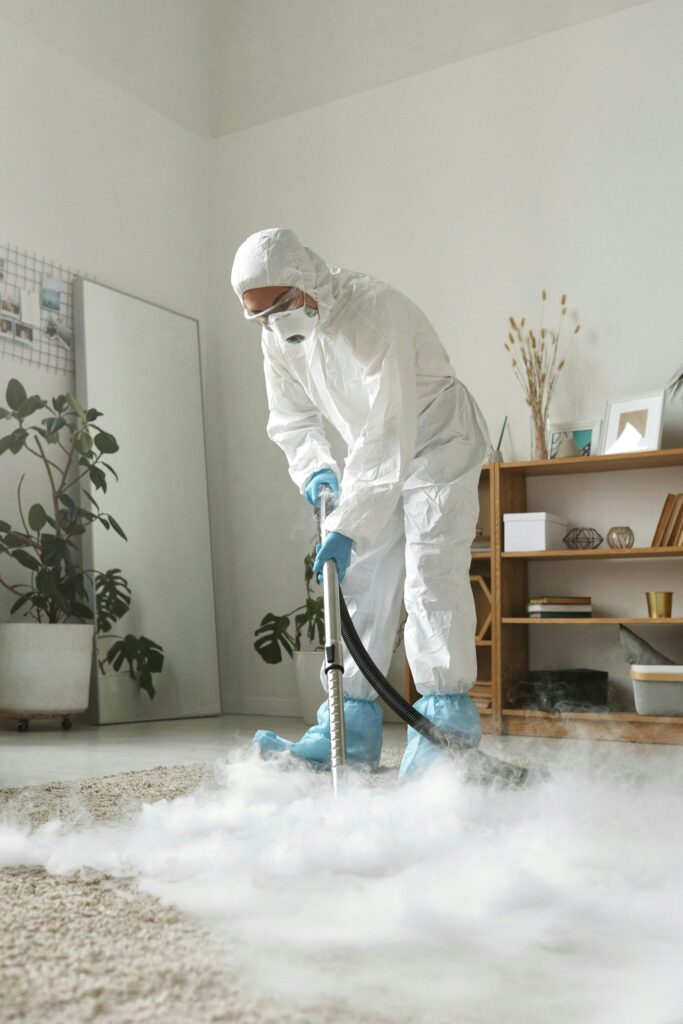
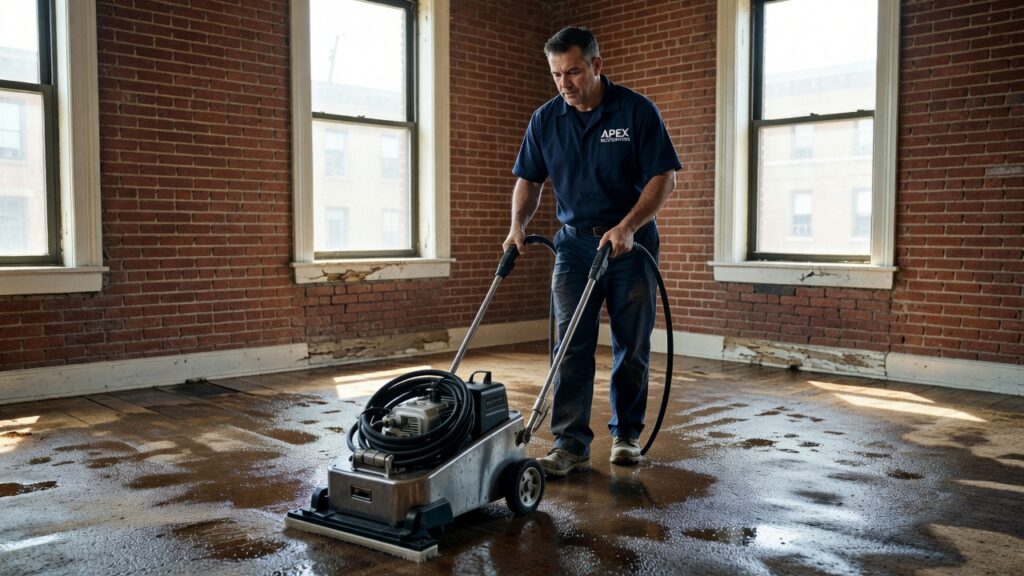
The process isn’t a single pass with a steam cleaner. Legitimate water damage carpet cleaning in New York involves standing water extraction first, then deep moisture extraction from the carpet and padding, followed by antimicrobial treatment and structured drying with commercial air movers and dehumidifiers. Once the carpet is confirmed dry by meter readings, a hot water extraction cleaning removes the soils and contaminants that the water event deposited. Hot water extraction, endorsed by major carpet manufacturers including Shaw and Mohawk, is the most effective method for restoring deeply soiled or compromised carpet fiber but it’s a final step, not a first one.
Why Choose Adam’s Carpet Cleaning in Manhattan
We’ve worked in Manhattan co-ops, rentals, and condos from Washington Heights down to Battery Park City. We understand building access restrictions, board approval requirements, and the particular challenges of moving equipment through narrow hallways and freight elevators in pre-war buildings. We show up with commercial extraction units and drying equipment, not residential hardware. And we give you moisture readings before we leave so you’re not guessing whether the job is finished. If you’re dealing with water damage right now, timing is the variable you can still control.
Contact Adam’s Carpet Cleaning NYC today to schedule emergency or same-day water damage carpet cleaning anywhere in Manhattan. Call us or book online at adamscarpetcleaningnyc.com the sooner we get there, the better the outcome.
Frequently Asked Questions
How quickly should I call for water damage carpet cleaning in New York after a flood or pipe burst?
Within 24 hours if at all possible. In Manhattan apartments, limited airflow and high occupancy density mean mold conditions can develop faster than in less confined spaces. The IICRC identifies 24 to 72 hours as the critical window before secondary damage including mold and permanent fiber deterioration becomes significantly harder and more expensive to address. Do not wait to see whether the carpet dries on its own.
Is water damage carpet cleaning in New York covered by renters or homeowners insurance?
It depends on the source of the water and your specific policy. Sudden and accidental discharge like a burst pipe is typically covered under standard renters and homeowner’s policies in New York. Gradual leaks or maintenance-related damage are often excluded. We recommend calling your insurance carrier immediately after the incident, documenting the damage with photos before any cleaning begins, and requesting an itemized invoice from your cleaning provider for the claim. We can provide documentation to support your claim, but we’re a cleaning company, not an insurance advisor your carrier is the right source for coverage specifics.
What is the worst time of year for water damage carpet cleaning in Manhattan, and why?
Summer is consistently the most difficult season for drying outcomes in Manhattan. High outdoor humidity from June through August means standard airflow and fan drying are largely ineffective sometimes counterproductive. Professional dehumidification equipment is essential during these months to achieve proper drying conditions. Winter is the most active season for water damage events due to pipe failures in aging building stock, but extraction and drying with the right equipment are still achievable year-round with professional-grade tools.
Related from Adams Carpet Cleaning NYC: Dry Carpet Cleaning in Manhattan, NY · And Eco Friendly Care Manhattan