Published November 3, 2026
Carpet Stain Removal in NYC Apartments: What Williamsburg Renters Actually Face
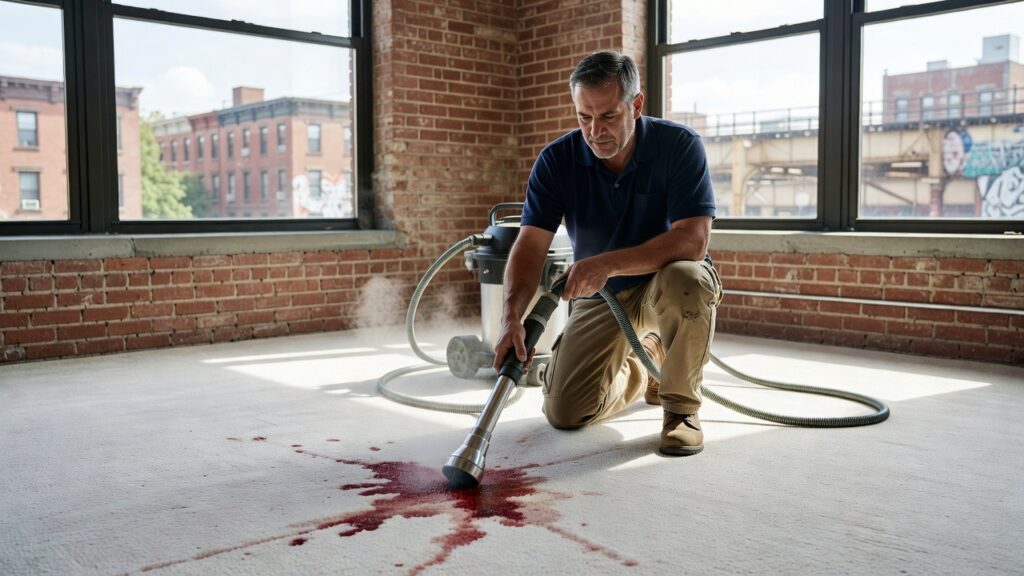
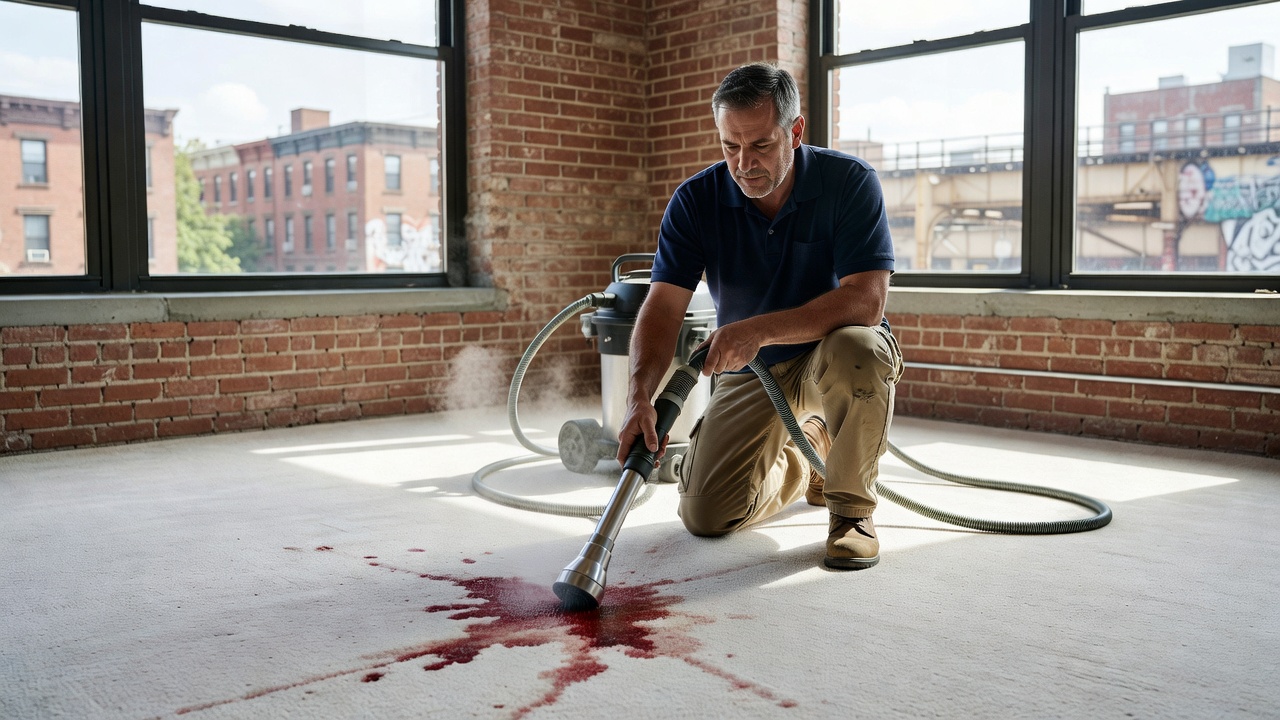
Carpet stain removal in NYC apartments is rarely as simple as blotting and moving on. Last spring, a tenant in a Williamsburg loft on North 7th Street called us two days before her lease was up. Red wine had soaked into a cream Berber carpet back in February and she’d spent weeks trying store sprays, baking soda and dish soap combinations that left the fiber stiff and slightly discolored. By the time we arrived, she was dealing with three separate problems: the original tannin stain, a soap residue ring and a faint mildew smell from over-wetting. We got it out, but we want to explain why that kind of call is so common in this neighborhood and what the job actually looks like from the moment we walk in.
Why Williamsburg apartments accumulate stains faster than most
Williamsburg is dense. The foot traffic through a typical Bedford Avenue apartment building lobby alone puts more soil on shared carpeting in a week than a suburban house might see in a month. New York City’s density exceeds 27,000 residents per square mile in Manhattan and Brooklyn’s numbers are not far behind, which means carpets in buildings near the L train corridor at Lorimer, Graham or Montrose pick up street grit, cooking residue and general urban particulate at a rate that shortens the time between professional cleanings considerably.
Most Williamsburg apartments also have older carpet installations. Landlords in converted warehouse buildings along the East River waterfront or in the low-rise rowhouses on South 4th often leave existing carpet in place for multiple tenancy cycles. That means a renter moving in is already starting on a carpet that has absorbed previous spills, and their own stains compound whatever is already locked into the backing.
The four stain problems we diagnose most often
Tannin stains from coffee, wine and tea
These are the most common calls we get from Williamsburg renters. Tannins bond to synthetic fibers quickly and oxidize over time, which is why a two-month-old red wine spill looks darker than the original pour. When we inspect this type of stain, we’re checking fiber type first. Polyester and nylon respond differently to tannin removers. The fix is a low pH enzyme cleaner worked into the pile with a soft brush and then extracted with hot water. According to major carpet manufacturers including Shaw and Mohawk, hot water extraction is the most effective method for removing embedded soils from residential carpet and we treat tannin stains the same way.
Prevention note: Blotting immediately with a clean cloth (never scrubbing) and calling us within 24 to 48 hours dramatically improves the outcome.
Pet urine
This is a multi-layer problem. Urine soaks through the face fiber into the backing and often into the subfloor padding. A renter who treats only the surface may eliminate the visible stain but leave uric acid crystals in the backing. Those crystals reactivate in humidity and produce a persistent odor. We use a UV blacklight during inspection to map the full spread, which is often two to three times larger than what’s visible in daylight. Treatment involves a bacterial enzyme product applied to saturation level, dwell time of at least 20 minutes and then extraction. In severe cases we pull up a corner of the carpet to treat the backing directly.
Prevention note: The sooner urine is extracted from the pile, the less that reaches the backing. Enzymatic cleaner from a pet store helps in the first hour but it’s not a substitute for professional extraction on anything beyond a small spot.
Set-in grease and cooking oil
Common in open-plan Williamsburg apartments where the kitchen flows into carpeted living space. Grease doesn’t look dramatic when it first lands but it pulls airborne dust onto the spot and creates a gray or brown patch that gets progressively worse. Detergent-based DIY sprays can break the grease but they leave surfactant residue that behaves like a soil magnet. We use a dry solvent pre-spray to lift the grease and then extract the loosened soil and any residue together. The carpet fiber is pH-balanced at the end to prevent rapid re-soiling.
Prevention note: Area rugs near kitchen boundaries are a practical barrier in these layouts and they’re easier to replace than wall-to-wall carpet.
Residue damage from DIY treatments
This was the second problem in the Williamsburg call we opened with. Soap rings, bleach spots and over-wet padding are all consequences of DIY attempts. Bleach is the one we cannot reverse. Oxidizing agents in many grocery store stain removers can strip dye from synthetic carpet permanently. What looks like a “lightened” stain is sometimes irreversible dye loss. We assess whether a spot is a residue problem (fixable) or a dye loss problem (not fixable) before quoting any work.
Prevention note: Plain cold water and a clean white cloth are the safest immediate response to almost any spill. Avoid any product with bleach or oxygen bleach on colored carpet until a professional confirms the fiber type.
What the full job looks like, start to finish
When we take a carpet stain removal job in Williamsburg, the visit typically starts with a walkthrough of the full carpet area, not just the reported stain. The American Lung Association notes that carpets can hold up to four times their weight in dirt and allergens, and in a well-trafficked NYC apartment the background soil level affects how we approach stain pretreatment. We’re looking at overall soil load, fiber condition, seam integrity and whether there are secondary spots the tenant may not have noticed.
We test the fiber with a quick burn test or by checking manufacturer tags if they’re still attached to the tack strips. We check for pH sensitivity with a small water drop. We assess whether the stain is fresh, set-in or has been treated with something that could interfere with our chemistry.
The actual cleaning sequence: pre-vacuum, stain-specific pretreatment, dwell time, agitation and hot water extraction. Dry time in a Williamsburg apartment, depending on ventilation, usually runs two to four hours. We set up air movement with fans where possible. We do a final inspection under good lighting before packing up.
Security deposits and what’s actually worth treating
A lot of the calls we get from North Brooklyn, including Greenpoint, Bushwick and East Williamsburg, come from renters calculating whether cleaning costs less than a deduction. In 2026, professional carpet stain removal for a single room in a Brooklyn apartment typically runs between $80 and $150 depending on the severity and the number of spots. A full studio or one-bedroom deep clean runs higher, generally $150 to $275. Those numbers vary based on carpet condition and access. We give written quotes before any work starts.
The Environmental Protection Agency notes that indoor air can be two to five times more polluted than outdoor air and that carpets trap allergens, dust mites and bacteria. That context matters for renters but also for owners who want their units re-let quickly without odor complaints from incoming tenants.
The Institute of Inspection, Cleaning and Restoration Certification recommends professional carpet cleaning at least every 12 to 18 months. For a Williamsburg apartment with multiple occupants and foot traffic from a busy street, we’d push that closer to annually.
Why choose Adam’s Carpet Cleaning in Williamsburg
We’ve worked in buildings throughout Williamsburg, from the converted lofts near the Brooklyn Navy Yard edge to the older rental stock on Havemeyer and Keap. We know the carpet types that show up in pre-war buildings, we know the tight stairwells and we bring the equipment that fits them. We don’t quote flat rates over the phone without knowing what we’re walking into. We give honest assessments, including when a stain is beyond what cleaning can fix, because a renter’s time and money matter. If you’re in Williamsburg or nearby neighborhoods like Clinton Hill, Crown Heights or Bed-Stuy and you’re dealing with a stain that hasn’t responded to DIY attempts, call us before the problem compounds further.
Reach Adam’s Carpet Cleaning NYC at adamscarpetcleaningnyc.com to schedule a visit or get a quote for your apartment.
Frequently Asked Questions
Can carpet stain removal in NYC apartments actually save a security deposit?
In most cases, yes. Professional cleaning costs significantly less than what landlords typically deduct for stained carpet. In 2026, a single-room stain treatment in a Williamsburg apartment generally runs $80 to $150. A landlord’s deduction for the same damage can run several hundred dollars or more depending on carpet age and replacement cost. We recommend scheduling a visit before your move-out inspection so you know what condition the carpet is in.
How long does carpet stain removal take in a Brooklyn apartment?
The active cleaning portion of a typical studio or one-bedroom apartment visit takes one to two hours. Dry time afterward runs two to four hours depending on ventilation. We set up fans to help move air through the space. Most tenants can walk on the carpet carefully within an hour of our finishing and resume normal use by the next morning.
What stains genuinely cannot be removed from apartment carpet?
Bleach damage and strong oxidizing agents cause permanent dye loss that cleaning cannot reverse. Some very old, heavily set pet urine stains that have reached the subfloor padding may also require padding replacement rather than cleaning alone. We assess every job before quoting and tell you clearly if a stain falls outside what cleaning can resolve, so you can make an informed decision about next steps.
Related from Adams Carpet Cleaning NYC: Dry Carpet Cleaning in Manhattan, NY · And Eco-Friendly Care Manhattan · And Eco Friendly Care Manhattan
Our services
Area Rug Cleaning · Upholstery Cleaning · Carpet Cleaning · Eco · And Eco · And Eco Friendly Care Manhattan