The Right Time for Hot Water Extraction Carpet Cleaning NYC: 2026 Seasonal Guide for Harlem Residents
Hot water extraction carpet cleaning NYC appointments have a way of getting pushed to the back burner until the carpet makes the decision for you. We got a call last February from a tenant in a pre-war walkup on 138th Street, near Lenox Avenue. She’d been meaning to schedule a cleaning since the previous fall, kept telling herself she’d do it after the holidays, then after the worst of winter. By the time we arrived, what started as a little tracked-in mud had become a deeply embedded grayish layer across her living room and hallway runner. The extraction machine pulled out water that looked like roof runoff. It took two passes. She told us she hadn’t realized how bad it had gotten because it happened so slowly, which is exactly how carpet damage works.
Harlem is a neighborhood that moves. Between the foot traffic on 125th Street, the M60 bus pulling in from LaGuardia, and the mix of longtime residents and new arrivals filling the brownstones from Central Harlem up through Washington Heights, carpets here take a beating that a suburban home in Westchester simply doesn’t. New York City’s density over 27,000 residents per square mile in Manhattan means NYC apartments accumulate foot-traffic soil and pollutants significantly faster than suburban homes, making more frequent professional cleaning advisable. That density is especially felt in Harlem’s tenement-era buildings, where hallway carpets and apartment entries see constant use.
Timing your hot water extraction cleaning around Harlem’s actual climate and your building’s rhythms makes a real difference in how well the process works and how long the results last. Here’s how we think about it, season by season.
Winter: The Season That Sets the Stage for Real Damage
Between December and March, Harlem carpets absorb the worst of what New York winters deliver. Rock salt from the sidewalks on Adam Clayton Powell Jr. Boulevard gets tracked in on boot soles. Slush from the subway grates at 125th and Lex comes home embedded in sneaker treads. Buildings run steam heat almost continuously, which keeps the air dry but also causes carpet fibers to contract slightly making it easier for fine particles to settle deep into the pile rather than staying near the surface where a vacuum can reach them.
The risk of waiting through winter is cumulative. Salt crystals are abrasive. Left in carpet fibers for weeks, they act like sandpaper at a microscopic level, degrading the fiber structure. This isn’t a scare tactic it’s just physics. We’ve seen carpets in Hamilton Heights apartments that needed replacement at five years because of three consecutive winters of deferred cleaning. A carpet that should last fifteen years doesn’t, and that cost falls on the tenant or the landlord.
Mid-January through February is actually one of the better windows to book hot water extraction, despite what people assume. Buildings are warm, which helps carpets dry faster post-extraction. Our schedules are typically lighter than in spring, so we can be more flexible. The one consideration: if your apartment has poor ventilation, keep a fan running or crack a window during the two-to-four hour drying period.
Spring: The Best Window and the Most Competitive One
March through May is when Harlem residents tend to do their serious cleaning, and for good reason. The winter’s accumulation is real. Pollen starts arriving by mid-April, which matters because, according to the American Lung Association, carpets can hold up to four times their weight in dirt, debris, and allergens — and spring pollen adds to a load that’s already heavy from winter. Getting a hot water extraction cleaning done before pollen peaks, ideally in late March or early April, removes the winter layer without letting spring allergens pile on top of it.
The downside to spring is availability. Everyone wants an appointment in April. We serve customers from East Harlem down through the Upper West Side and across to Astoria and Long Island City, and spring bookings fill fast. If you wait until late April, you may be pushed to mid-May, which means you’ve let another month of pollen settle in. Book early if you’re targeting spring.
Summer: Faster Drying, But Watch the Humidity
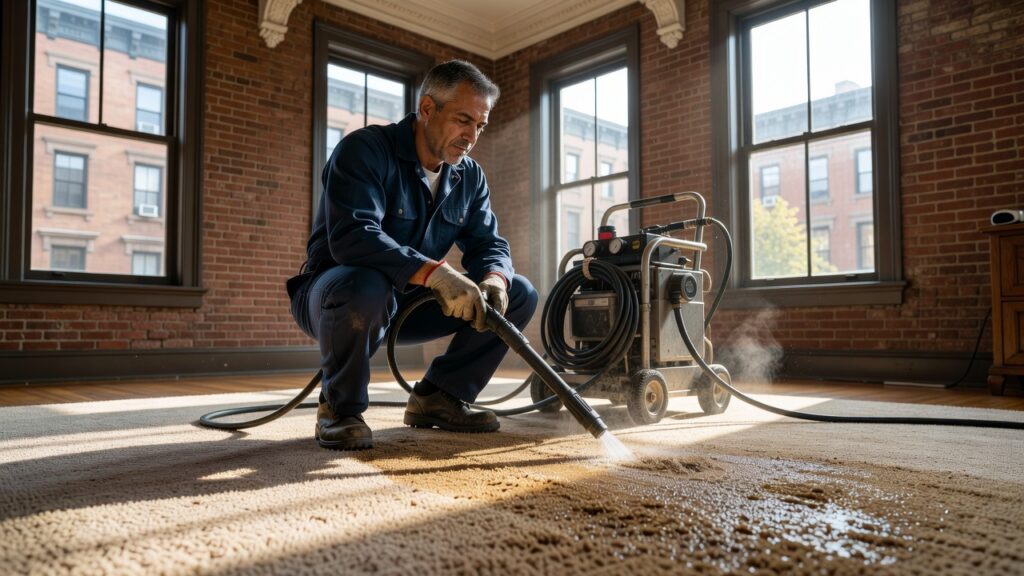
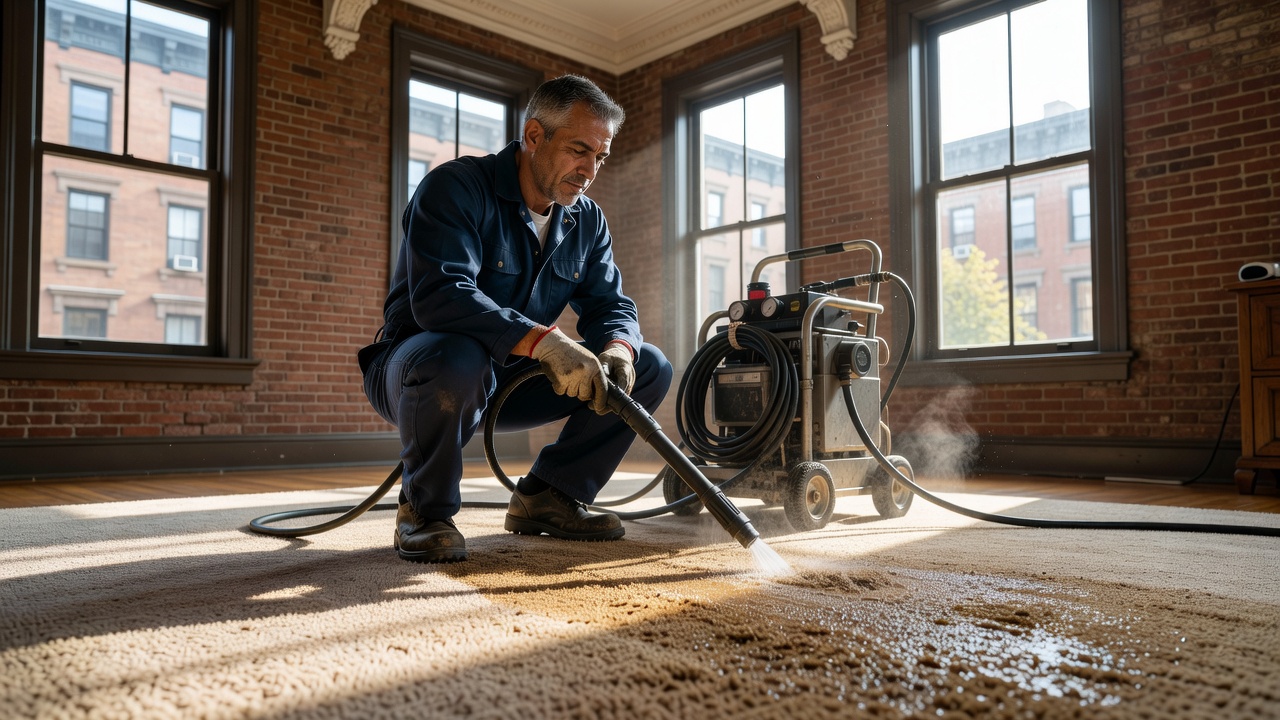
June through August in Harlem brings genuine heat and more importantly for carpet cleaning humidity. Hot water extraction works by injecting heated water into the carpet pile and immediately extracting it along with loosened soil. The cleaner the extraction, the faster your carpet dries. In high humidity (Harlem in late July can sit at 80 percent humidity or higher), drying times extend. A carpet that normally dries in two to three hours might take four to six.
Extended drying time isn’t just inconvenient. A carpet that stays damp too long in a warm apartment can develop mildew, particularly in ground-floor units in Hamilton Heights or in basement-level apartments near Morningside Park. We’re not trying to talk you out of a summer cleaning plenty of our Harlem customers do it but if you’re scheduling between June and August, plan for it on a day when you can run the air conditioning, keep a window open, and ideally stay out of the room for a few hours.
Summer is also a practical time for families with kids out of school. A Thursday appointment means the carpet is fully dry before the weekend. That logic works well.
Fall: The Window People Miss
September and October are underrated for carpet cleaning in Harlem. The weather is moderate, humidity drops, and drying times are among the fastest of the year. According to the IICRC, residential carpets should be professionally cleaned at least every 12 to 18 months to maintain appearance and indoor air quality and fall gives you the chance to reset before winter begins the damage cycle again.
Think of a fall cleaning as protective maintenance. You’re removing summer’s accumulated dust, the tracked-in debris from back-to-school foot traffic, and the residue from any summer parties or gatherings. You’re also going into the salt-and-slush season with clean fibers that have more capacity to absorb without degrading. Carpets that enter winter already loaded with soil and debris reach critical damage thresholds faster.
October is probably our single favorite month to do hot water extraction work in Harlem. The building heat hasn’t kicked in yet, so windows can stay open without a blast of cold air, airflow is good, and our schedules still have room before the holiday rush compresses everything.
What Happens When You Keep Delaying
The pattern we see most often: a resident in a Strivers’ Row brownstone or a newer development off Fifth Avenue puts the cleaning off through one season, then another. By the time we arrive, the carpet has been filtering air for 24 or 30 months. According to the Environmental Protection Agency, indoor air can be 2 to 5 times more polluted than outdoor air, and carpets trap the allergens, dust mites, and bacteria that contribute to that indoor pollution. A carpet that hasn’t been hot water extracted in over two years isn’t just visually degraded it’s actively working against the air quality in the apartment.
The structural risk is separate. Embedded grit cuts at fiber bases with every footstep. Stains that are six months old are chemically bonded to fibers in ways that recent spills are not. We can still help we almost always can but the honest answer is that outcomes are better, and the carpet lasts longer, when cleaning happens on a reasonable schedule rather than after a problem forces the call.
Why Harlem Residents Choose Adam’s Carpet Cleaning
We’ve been working in Harlem and across upper Manhattan for years in the old pre-wars on Edgecombe Avenue, in the newer high-rises near the 145th Street corridor, in ground-floor units were moisture management matters most. We carry truck-mounted hot water extraction equipment that produces consistent heat and strong extraction pressure, which means shorter drying times and more thorough soil removal than portable units can deliver. We know these buildings. We know that the hallway runner in a five-story walkup needs different handling than the wall-to-wall in a Park Slope co-op. We schedule around your day, give honest assessments, and don’t quote one price and charge another.
If you’re trying to figure out the right time to book, call us or use the contact form at adamscarpetcleaningnyc.com. Tell us about your building, your carpet type, and when you last had it cleaned. We’ll give you a straight answer about timing and what to expect no pressure, no upselling you into services you don’t need.
Frequently Asked Questions
How long does hot water extraction carpet cleaning take to dry in a Harlem apartment?
In most Harlem apartments, carpets dry within two to four hours after hot water extraction under normal conditions meaning moderate temperature, some airflow, and low to moderate humidity. In summer months when Harlem’s humidity climbs above 70 percent, plan for closer to four to six hours. Running a ceiling fan or keeping a window open significantly shortens drying time. Ground-floor units and basement-level apartments tend to dry more slowly regardless of season, so we often recommend scheduling those on lower-humidity days when possible.
Is hot water extraction safe for the older carpets and rugs common in Harlem’s pre-war buildings?
Yes, with appropriate care. Hot water extraction is endorsed by major carpet manufacturers as the most effective deep-cleaning method, and it works well on the wool-blend and nylon carpets common in older Harlem apartments and brownstones. The key is using the correct water temperature and extraction pressure for the fiber type. Natural fiber rugs wool, jute, sisal require lower heat and faster extraction to prevent shrinkage or backing damage. When you contact us, let us know what type of carpet or rug you have and we’ll adjust accordingly. We do not use a one-size approach.
How often should Harlem residents schedule professional hot water extraction cleaning?
The IICRC recommends professional carpet cleaning every 12 to 18 months for residential carpets under normal conditions. In Harlem specifically, we generally suggest the shorter end of that range closer to 12 months because Manhattan’s density means significantly higher foot traffic, more outdoor pollutants tracked indoors, and faster overall soil accumulation than in lower-density areas. Households with children, pets, or anyone with respiratory sensitivities should lean toward annual cleaning. A fall and a spring cleaning per year is reasonable for high-traffic common areas in multi-bedroom apartments.